

Showing posts with label war. Show all posts
Showing posts with label war. Show all posts
Thursday, April 12, 2012


Saturday, March 17, 2012
Before The Parade Passes By
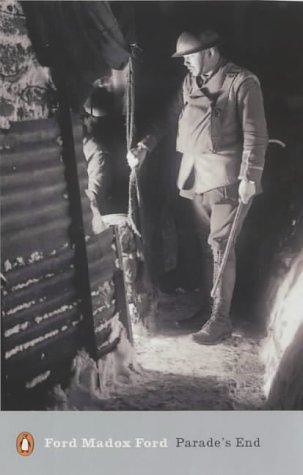
A couple of years ago I took the interwar lit course at uni and it's topic was The Great War and Shell Shock. The professor devoted a full month to discussing Parade's End by Ford Maddox Ford, which no one had ever heard of before. It has never been out of print but it has never been a best-seller. But it has been hailed as one of the greatest English novels of the Twentieth Century, which I would have to agree with.
Parade's End is actually four novels, published separately but meant to be read as one volume. They are:
Some Do Not... (1924)
No More Parades (1925)
A Man Could Stand Up (1926)
Last Post (1928)
I have struggled since I began this blog to write a post about this novel since I began this blog. It's just so hard to put the plot and what the author is saying into words. So, here goes.
Parade's End chronicles the life of Christopher Tietjens from his life just before the outbreak of the war, to his service on the Western Front and his life after he returns and tries to find his place in a society that has no need for his character and what it stands for.
Tietjens is "the last Tory". And by Tory, I don't mean a member of the Conservative Party, I mean a Tory as opposed to a Whig. Just look it up, it's to hard to explain succinctly. Tietjens is a brilliant government numbers man, a member of the landed gentry, an officer and a gentleman and the last Edwardian. Or at least he was before 1914. After the war he is still the same man, but the problem that he faces is that the Twentieth Century started while he was serving at the Front and by the time 1918 roles around and he returns from France, everyone who acted like him and held his values had either been killed or were too old to have a meaningful place in society. For Tietjens, the Twentieth Century is embodied in the two women in his life. His bitch of a wife Sylvia, a vindictive and sadistic socialite who is determine to ruin both him and his entire family history and Valentine, a high-spirited modern woman and a suffragette whom he meets during the war and whom he lives with after the war in an unconsummated relationship.
In the book, Ford wrote that the effect of the First World War was "a crack across the tabletop of history". And in a sense, it was. It ripped an entire society from the stagnate past and thrust it into the modern world in the space of just four years. Nothing would ever be the same and this was the message that Tietjens finally begins to understand by the end of the book.
But what is the book about? Well, that's rather hard to explain. To begin with, Ford began writing it during the war, but didn't finish it until ten years after. The plot is hard to explain because Ford is one of the first writers to employ that oh so modernist method of time skips. The narrative, like memory itself, jumps around from different times and places and it is only at the end that we finally get the full picture of just how much being in the war had affected Tietjens.
Parade's End is about trying to capture and explain the world that Tietjens comes from, the world that was lost so suddenly in 1914. In a nutshell, Parade's End is about the end of an epoch and it is an attempt to recapture what was lost: lost time; lost friends; the loss of a generation of young men; the magic of the past; the ending of parades; the end of the natural officer class; and the end of a way of life.
Remember the last episode of Blackadder Goes Forth? That is what this book is about. It is about those officers who went Over The Top and survived and came back to discover that after the most horrific experience in human history (up to that point) they had no place in society.
I wouldn't say that I liked my experience of reading Parade's End. I didn't enjoy reading it, but I was engrossed by it. You have to read it in order to understand fully the effect that the Great War had, not only on those who lived through it, but more importantly, the affect that it had (and still has) on those who came after it and on the modern world itself. For without the First World War, there would be no modern world.
Because it is so long and has no linear narrative, Parade's End would be almost impossible to adapt to television (it could never be a movie) without losing the development of it's characters and Ford's message. Or at least that's what I and everyone in my class thought so when we were reading it. However, the BBC has adapted it into five episodes for broadcast later on this year and have cast Benedict Cumberbatch (the most awesome real name ever!) as Christopher Tietjens. I think he will be perfect in the role. There is only one production still at the moment, but I shall post the trailer and air dates as soon as they are released. But I do highly recommend reading the book before it airs. You have plenty of time to do so. Tell me what you think of it.

Tuesday, November 8, 2011
The Man Who Never Was
Let me tell you a tale.
In April 1943, a body of a young Royal Marines officer washed up on the coast of Spain. Amongst his possessions were two letters from two very high up commanders, hand written and on authentic stationary, casually mentioning the cleaver rouge that they would pretend that they would invade Sicily from Africa, but they would really be sending the Allied forces into Greece and Sardinia. The body was properly buried by the "neutral" Spanish and the letters were carefully copied by the Spanish and passed onto the Nazis before the corpse's personal effects were returned to the British.
Sounds like someone majorly fucked up in allowing such sensitive information to be placed in the hands of Nazis. Or like something out of a work of fiction.
Wrong.
This was actually a very careful and methodic plan, concocted by the Department of Spying and Cleverness in order to deliberately mislead the Nazis into thinking that the Allies would not attack so obvious a target as Sicily.
It was called Operation Mincemeat and it was the single most successful act of deception in the entire war. It made Operation Husky (the invasion of Sicily) a success and saved thousands of lives and is one of the major factors that helped us to win the war.
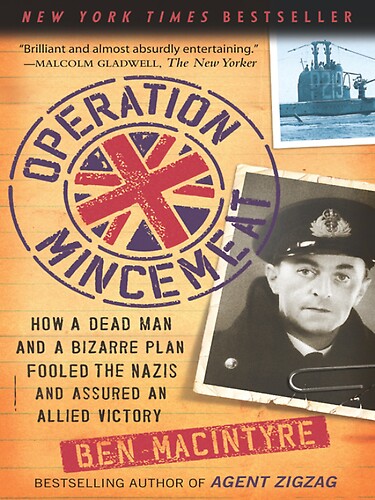
Sixty years after the plan was thought up of in the secret Rooms 13 and 39 of the Admiralty, the whole truth and the extent of preparation for Operation Mincemeat was carried out successfully, not to mention how much Churchill was relaying on it, has finally been revealed through declassified documents and meticulous research by Ben McIntyre in last year's book Operation Mincemeat.
The book itself is a fascinating and thrilling read and I do highly recommend that you read it. On several occasions as I was reading it at work, coworkers would ask me what the book was about. When I told them, they either said "Oh, so it's fiction, eh?". But it's not. Or, at least, not entirely.
Operation Mincemeat was the brain child of an intelligence officer called Cholmondeley (who went off the hunt locusts in Arabia after the war) and he got the idea from a memo by Ian Fleming (who did intelligence work during the war and got the idea for creating James Bond there) who in turn got the idea from a forgotten 1930's detective novel. So, you see, Operation Mincemeat is not a work of fiction. It is a deliberate work of fiction, to cover up reality, and was based on a work of fiction.
Cholomondeley and his colleague Ewan Montagu (who's brother was the top British spy working for the Soviets) worked deligently for months in order to create "Major William Martin" and make him into a real person. Their work included obtaining a suitable body from a coroner named Bentley Purchase (that's his real name), planting false personal letters, bills and theatre stubs on him (all real and authentic), giving him a personality, girlfriend, photographs and a stuffy father. They also outfitted him with a uniform that had been broken in by Montagu and some underwear that had belonged to a dead Oxford don and finding a submarine to transport the body to a specific point off the coast of Spain where a major Nazi spy just happened to be living and they then announced the death of "Major William Martin" in the Times, ironically in the same edition that also carried the news of the tragic death of Leslie Howard.
All they had to do was sit back and wait to see if the Germans had bought the story and letters hook, line and sinker.
Which they did.
Operation Mincemeat was a success for two reasons.
First, it just so happened that the head of German Intelligence Analysis was a secret anti-Nazi and he probably did see through the web of deception but supported it in his report.
Second, and most importantly, the Nazis did not have a sense of humour. They simply were unable to see the fact that a dead body with some very important information about the Allies' next move had so conveniently dropped into their laps was really a macabre joke told by the British. Indeed, it was the Nazis not having a sense of humour that played a major part in us winning the war.
After the war, Ewan Montagu wrote a book called The Man Who Never Was about the parts of Operation Mincemeat that the government would let him reveal. It was made into a film, which has a few added subplots to make it more entertaining.
There is also a documentary made to tie in with the book Operation Mincemeat. I haven't seen it yet, but it was done by the BBC, so it must be good.
Tuesday, August 30, 2011
Cinema Tuesdays {Pin Up Girl}
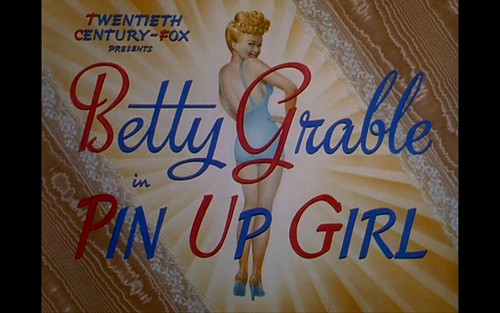
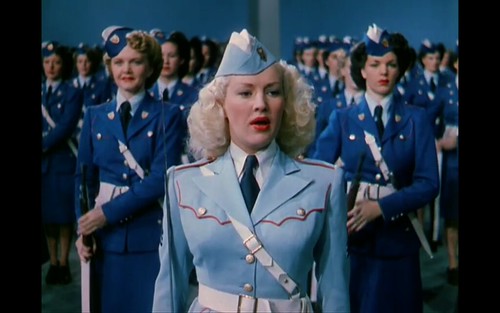
In this short 1944 musical, America's favourite pin up, Betty Grable, plays Lorry, a sweet but compulsive liar from a small town who by the end of the picture ends up as a big night club singer and wins the heart of a war hero while maintaining some impressive hair styles that could only be achieved with the help of several studio hairdressers. It also stars Martha Raye and Joe E. Brown. The film itself is rather fluffy and silly, but it has lots of peppy musical numbers and Miss Grable showing off her morale-boosting million dollar legs.
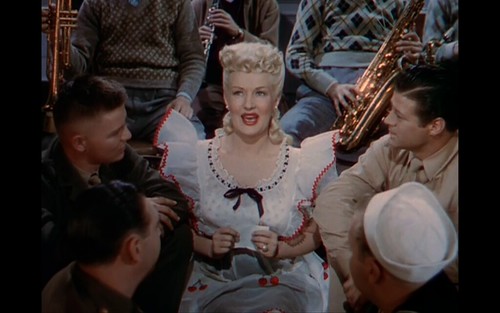
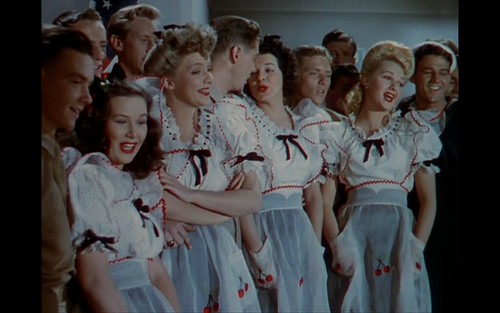
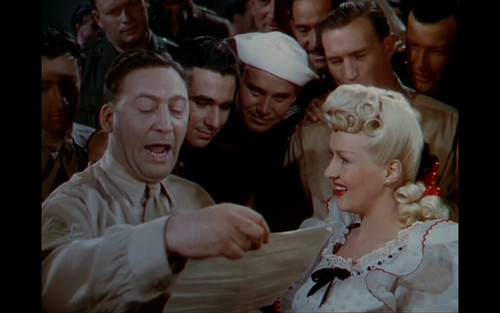
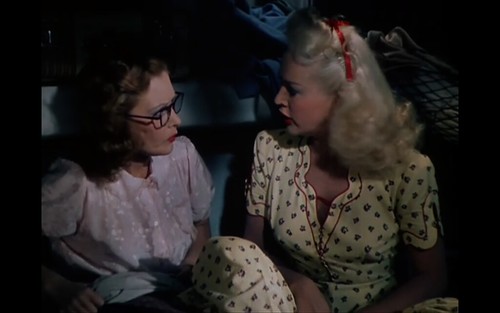
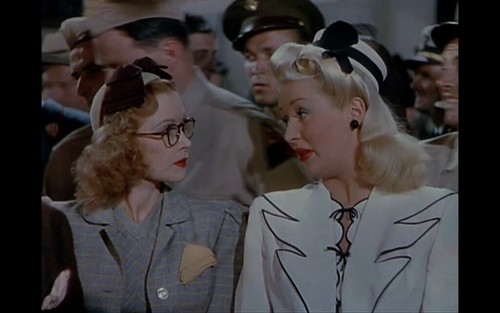
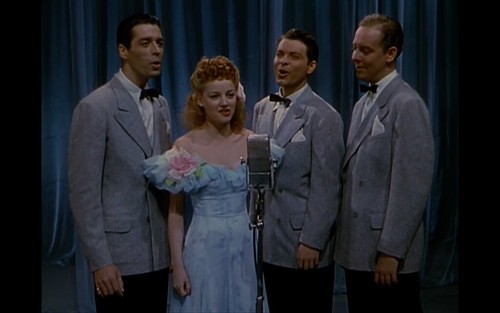
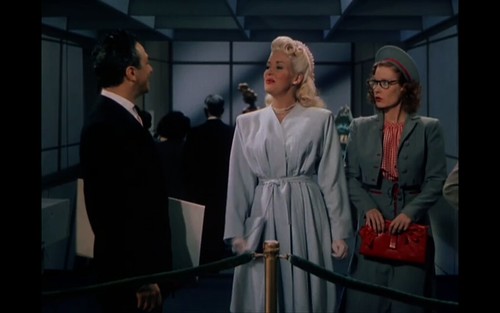
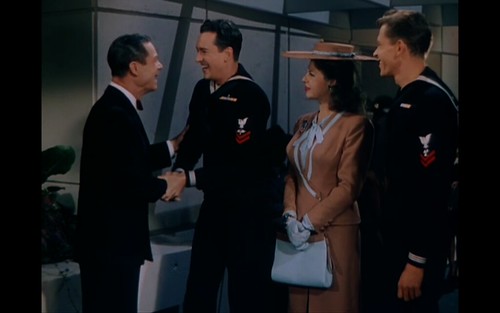
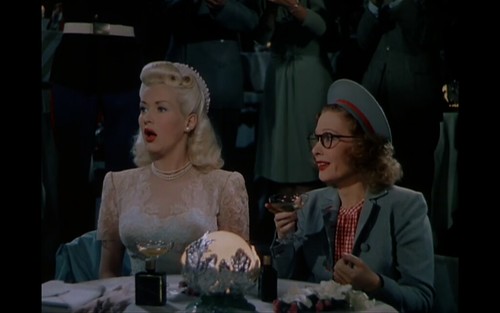
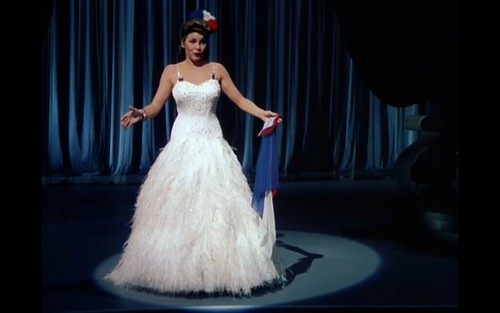
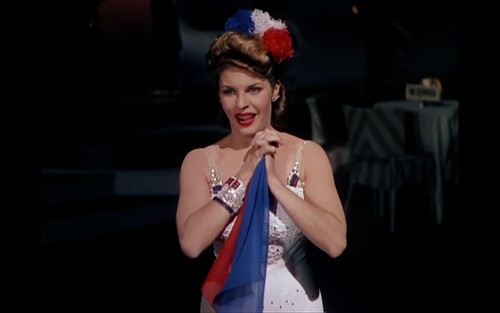
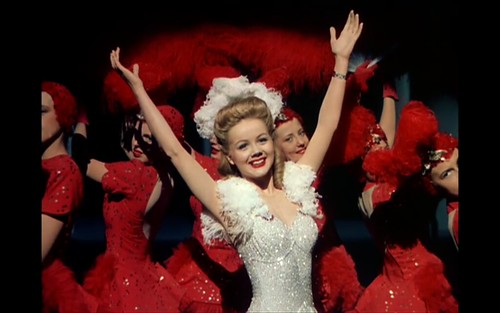
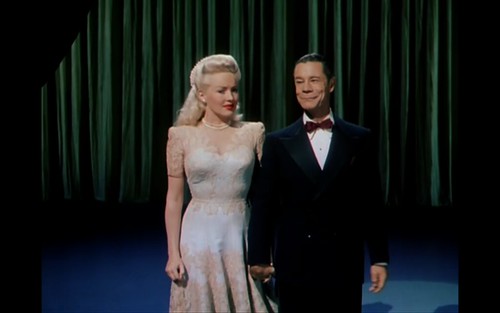
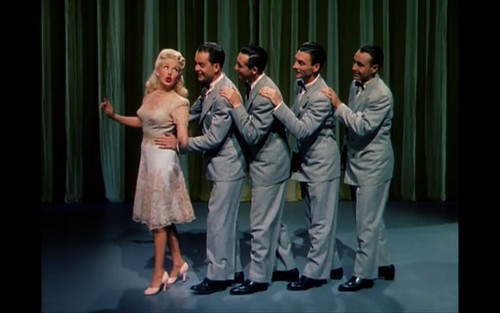
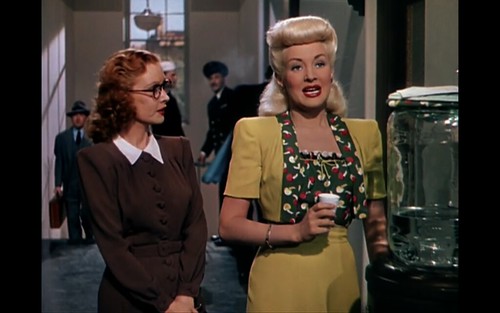
My favourite outfit from the movie
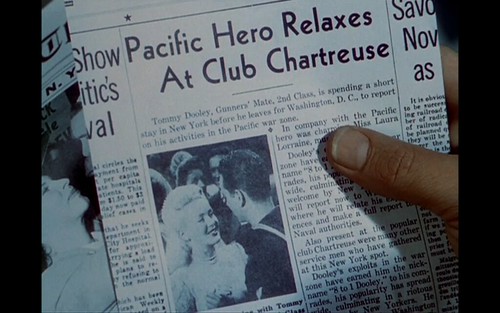
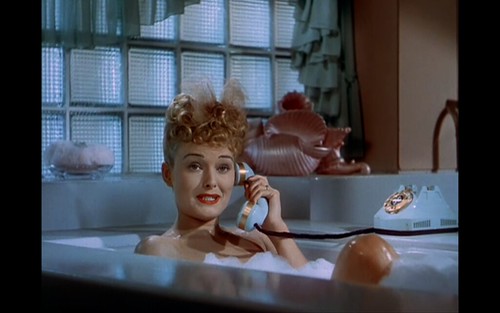
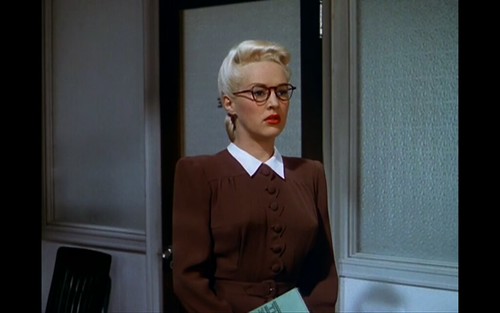
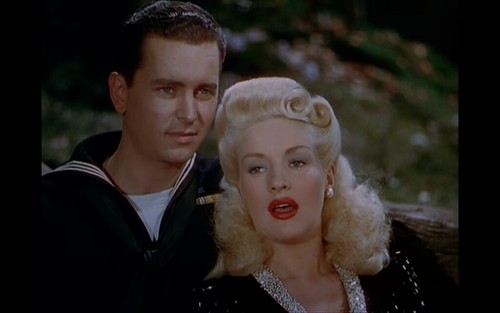
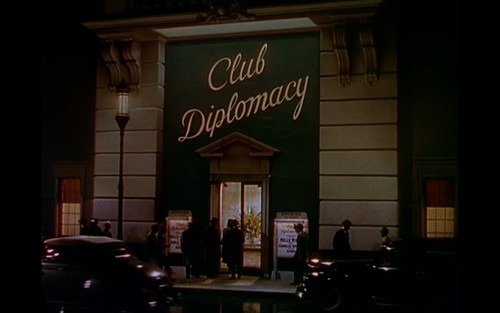
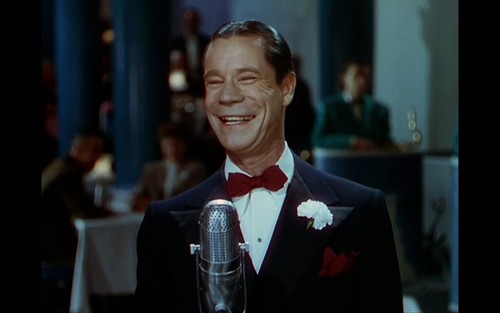
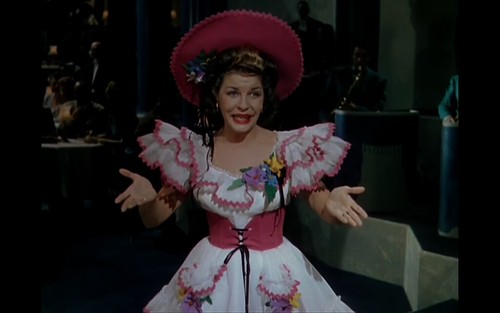
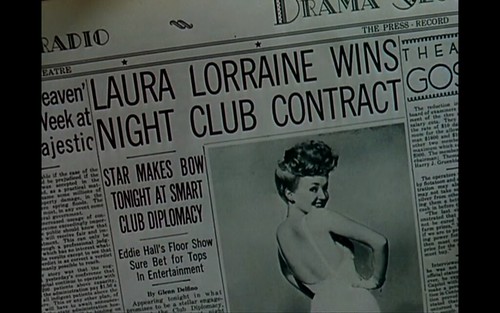
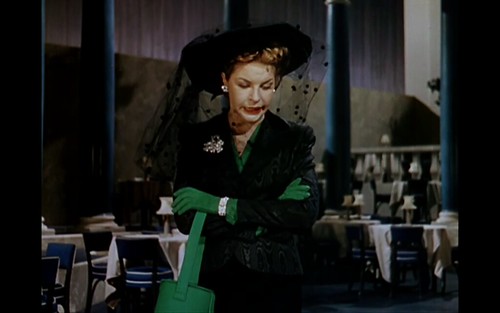
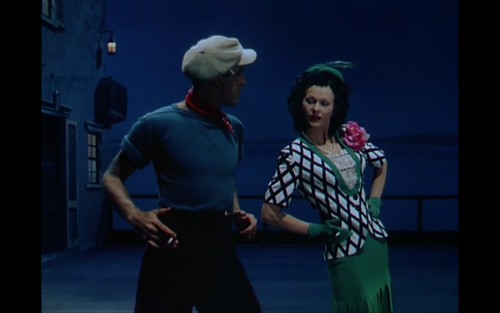
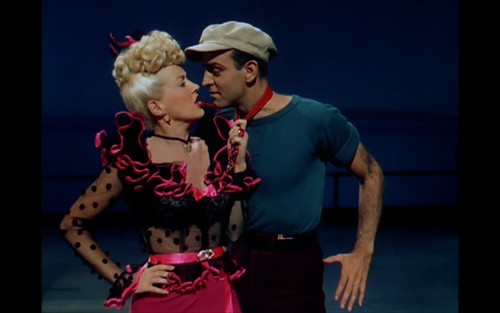
Forties Streetwalker Chic!
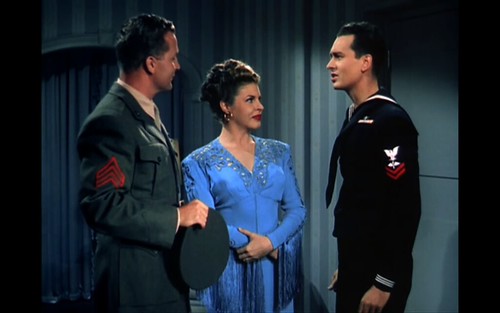
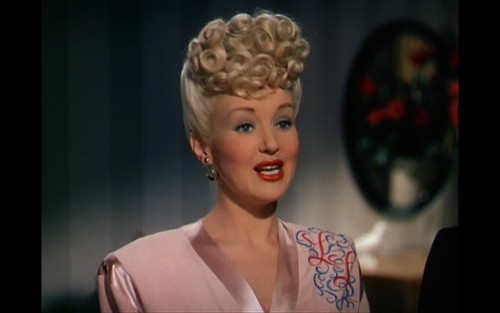
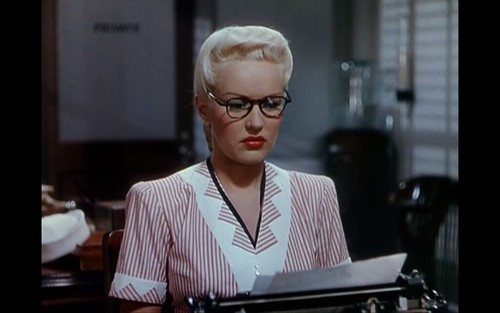
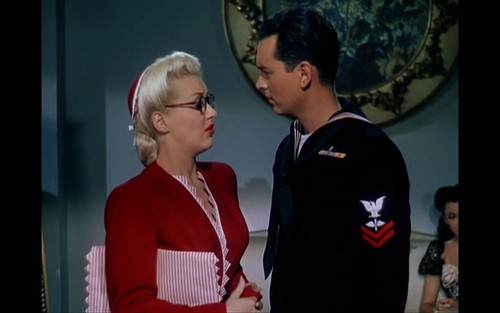
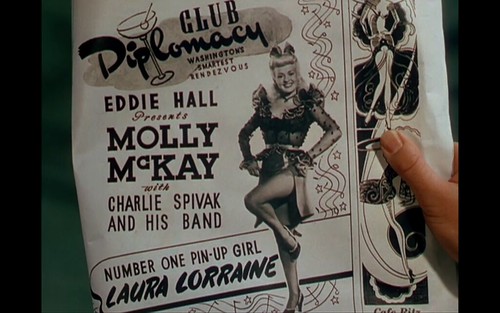
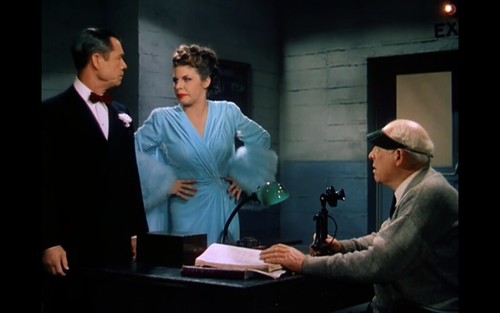
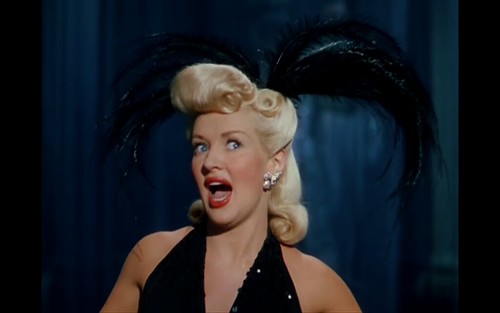
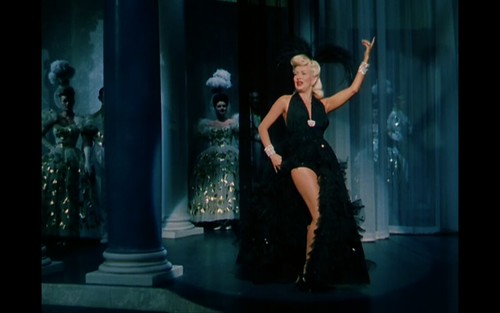
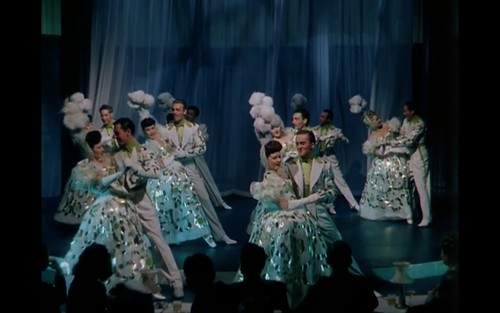
Here is a deleted number that I found. I prefer her embroidered dress and the song to the "Don't Carry Tales" number from the finished movie.
Tuesday, August 23, 2011
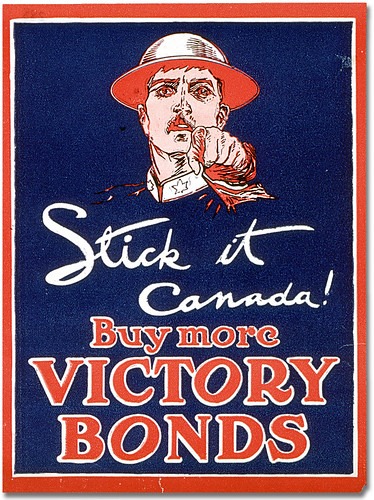
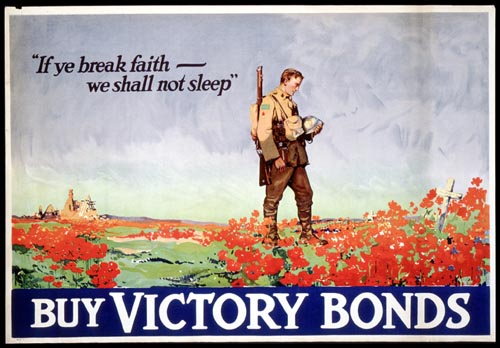
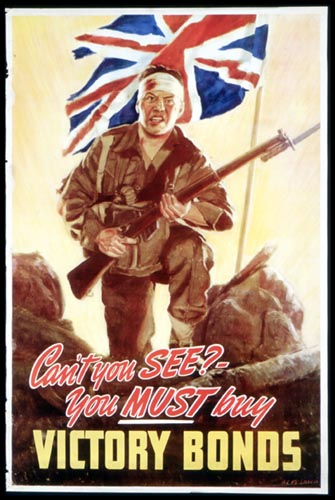
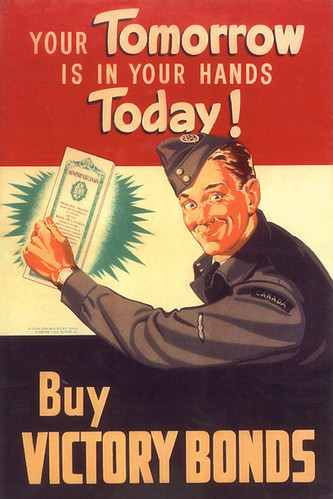
Buy Victory Bonds!
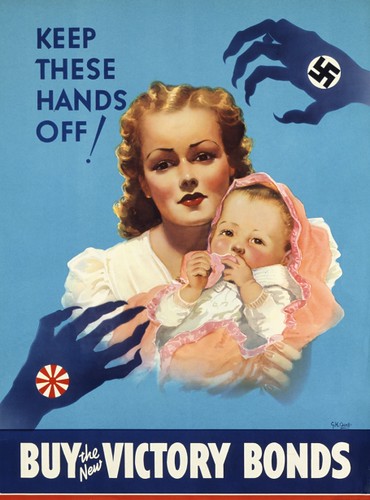
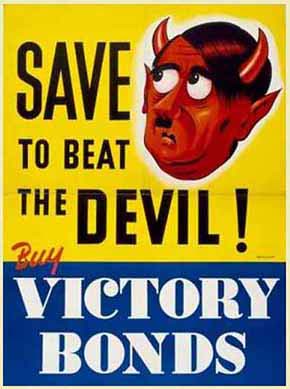
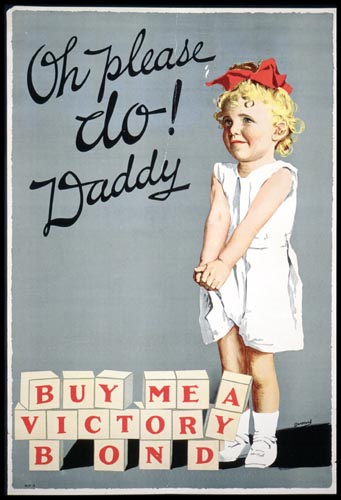
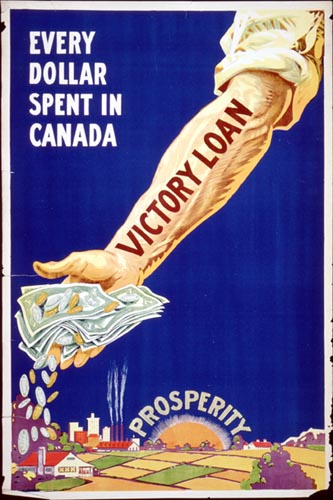
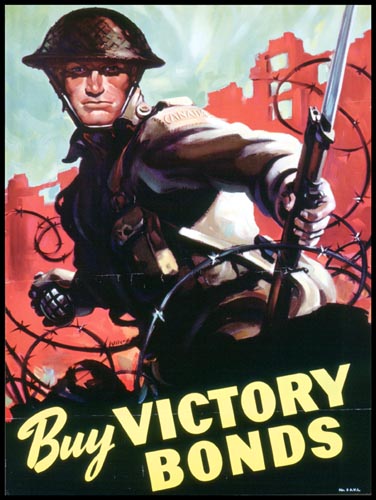
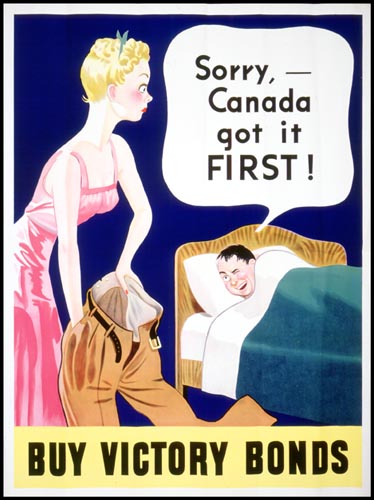
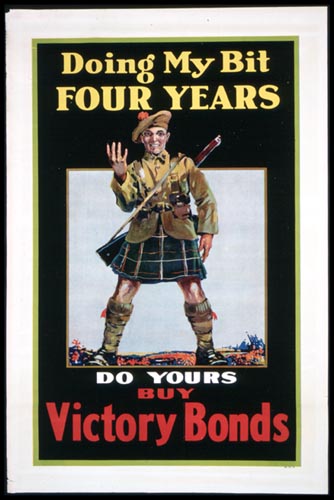
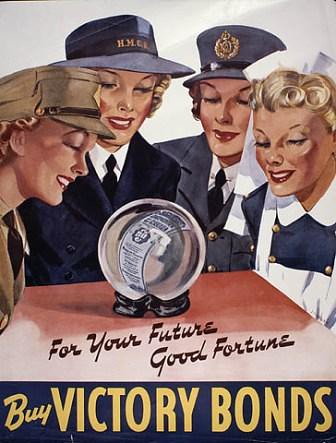
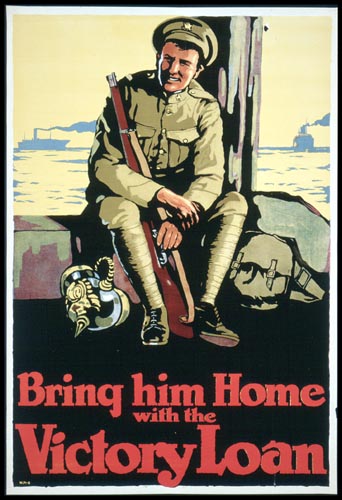
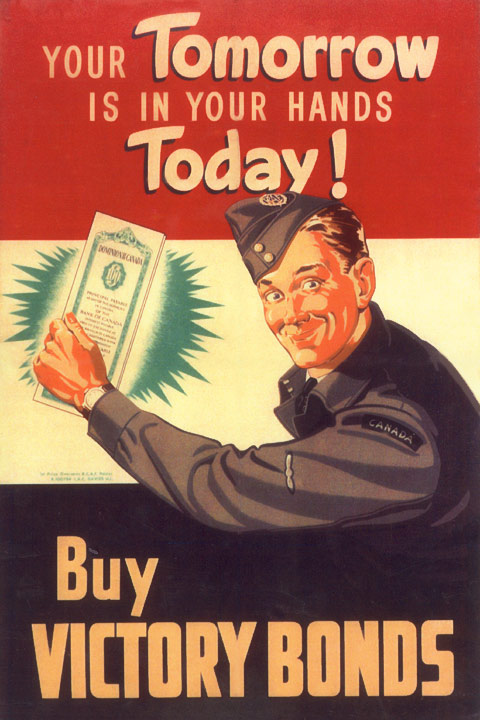
Since this month's Cinema Tuesdays theme is Second World War Musicals and I have been re-watching Foyle's War and reading a couple of war books to review, I thought that I would post some of the war posters that keep cropping up in any movie or TV show about the war. Clearly all of the posters are meant as propaganda, but they were and are still highly important to the war effort.
Victory Bonds (also known as War Bonds in America) were probably the single most important way the Allies had to finance the military operations.
A Victory Bond is a debt security issued by the government that would finance the war as well as making civilians feel that they were doing their bit to help those who were able to fight. The Bonds were also useful as a means of controlling inflation by removing excess money from circulation in return for using it as a stimulus for consumer spending after the war. Remember the huge economic boom and rise of consumer goods after WW2.
Bonds were readily available at rallies, banks, post offices and other public places, including occasionally at movie theatres and in a wide range of denominations so that everyone could afford them.
I've focused on Canadian Victory Bond posters from both wars because the was the most successful out of all of the Allied nations, given the relation between capital and population. It raised over $1.5 billion in the First World War and around half the cost of the Second World War was covered by selling Victory Bonds.
The images that were used in Canada, UK and US were clearly designed to appeal to everyone on a very basic level. Most of the posters that I looked at were obviously patriotic, but others appealed to the future and the conscience, usually involving fighting soldiers or small children. The also have large lettering and no small print since there was no need to explain what the poster was advertising for.
What do you think of them?
Would you still buy a Victory Bond?
![990400-019_thumb[2]](http://farm7.static.flickr.com/6205/6075219113_050ff47f1e.jpg)
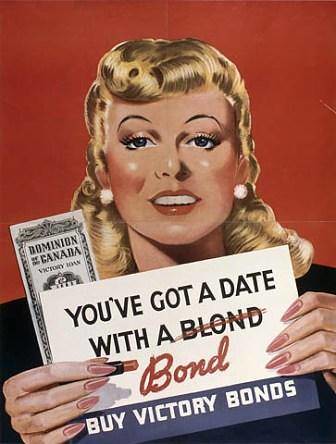
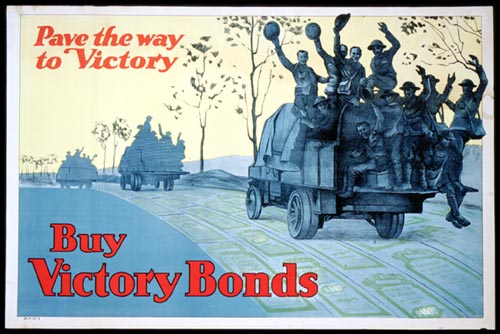
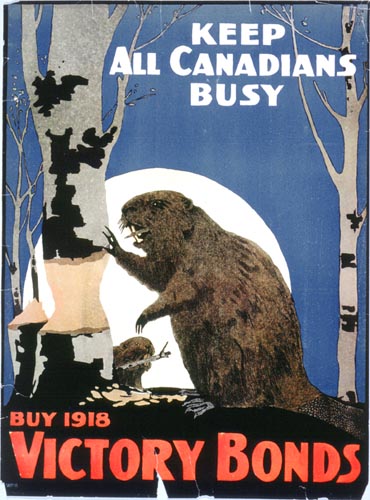
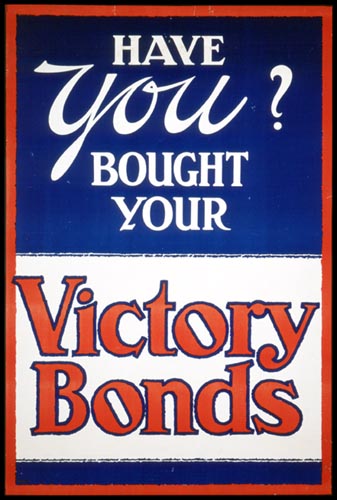
Here's a public service film that I found starring Bette Davis:
Subscribe to:
Posts (Atom)