Showing posts with label mad men. Show all posts

Monday, October 11, 2010

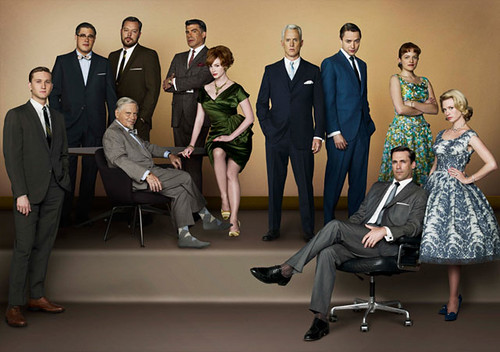
Why I'm Bored with Mad Men

mad_men_1

Warning: there be spoilers ahead

To be perfectly honest with you, I've been bored with Mad Men since the middle of the first season. I watch it partly because of the costumes and set designs, but mostly because I feel a sense of obligation to watch it, i.e. "Oh, I love your outfit! You must watch Mad Men."
Part of my dissatisfaction may stem from the fact that I don't watch a lot of soap opera formula shows, aside from Bones, where at least the murder will be solved by the end of the episode, even if the character development isn't.
Everything if always perfect. The offices don't look like they're being used throughout the day and everyday, not just when the cameras are there. There is never a paper, ash tray or a book that has been moved, every prop is always just so. The costumes (not clothing) are always perfectly crisp, straight and ironed. Nothing looks like it has been worn multiple times over a period of months or years or mended or even home made. There is never a hair that has randomly fallen loose or a hair style that has gone flat by the middle of the afternoon. Everything of an aesthetic value looks like it was copied from Taschen's All American Ads of the 60's. In comparison, watch a couple of episodes of my favourite TV show, which I doubt if Matthew Weiner or Janie Bryant have even seen, to see how people in offices in the Sixties actually looked. Or even look at family snaps from the Sixties on Flickr, where people had *gasp* wrinkled clothes. No one was ever that perfectly dressed and never made fashion mistakes.
In terms of character development, glaciers move faster. Expect for Harry and Peggy (but only just), no one has moved beyond what their character was like in the pilot. And just look at how slow things have been this season. Sally should have run away in episode 3, that failure of a doctor Greg should have been killed in Vietnam (c'mon, you know he's going to), Betty is still an unhappy child, obsessed with superficial perfection and Don is still coasting on his belief in his own awesomeness.
But the real reason why I'm bored with Mad Men is how wrong they've been getting the Sixties. Aside from a few passing references to all of the changes that have been going on, nothing has changed in the world of SCDP since the pilot. Yes, the clothing and sets are changing but the attitudes aren't. If Mad Men is intended to show how everything changed in the Sixties and created the society that we live in today, I don't see it. Where is Helen Gurley Brown? The talk of movies becoming racier as the Code was slowly being scrapped? What about the books that were being banned on moral grounds? Why are they only showing the downward spiral of New York now instead of when it started with Penn Station being destroyed? What about the biggest thing to have happened in the Sixties to America, after the Moon landing, JFK and the Pill? Anyone? That's right, The Beatles on Ed Sullivan. They've only just mentioned The Beatles two weeks ago in the summer of 1965 and didn't even play a song, just an instrumental version of "If I Fell" played over the credits. Couldn't they get permission from Paul and Yoko? The Beatles changed everything; culturally, fashion-y and musically speaking. And yet Mad Men skipped right over them and went right into the Stones and heroin. The times were a'changing, but not in the world of Mad Men. What will happen when the show gets to 1966 and 1967?
Thoughts?

Monday, September 27, 2010

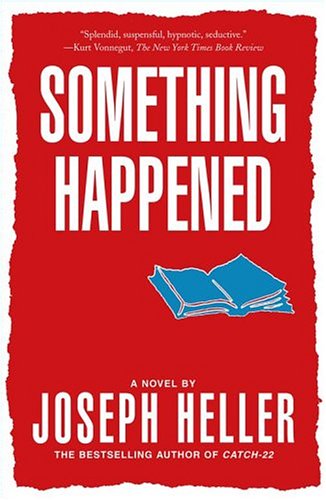
Vintage Novels {Something Happened}

something_happened

Last fall, I took an American Lit course on the subject of the male mid-life crises in the later half of the 20th Century and this is one of the novels that we read. I thought about doing a post about it then, but I didn't think it was fitting at that point, so instead I wrote my term paper on it.
Given the self-reflection that Don Drapper is going through this season, I think that the time is right to talk about it. Something Happened is Josph Heller's long awaited second novel and it didn't do as well as Catch-22 did. This is mostly because it's very difficult to read, mostly because there is no plot, in a traditional sense.
The entire novel, which is extremely long, is Bob Slocum's reflection on his life, experiences, job, family life and his (negative) opinions of those that he interacts with. Something Happened is basically what Don's life would have been like in ten years had Betty not divorced him. Bob's wife is a bored and not aging very well, his daughter is a teenager and rebelling against everything. His middle son, whom he loves more then anything is quiet, not doing well at school and is terrified of everything and only wants to please his father. Bob is ashamed of his youngest son (the only member of his family that he names) because he has mental problems and hurts Bob's social standing because they can't talk about him in public for fear that the family would be judged.
You may have noticed how dark and sad Don's thoughts are. That is the tone of the entire novel. Bob is afraid of everything, especially of his co-workers, who are in turn afraid of each other. Bob is also afraid of the social changes the are happening in the Seventies, afraid that his wife will discover his numerous affairs, afraid of what his children will grow up to be. Essentially, Bob is afraid of life. The entire novel is about nothing happening until the very end and it is up to you to determine whether Bob is telling himself the truth in the last chapter about how the thing that happened has changed him or if he is just lying to himself.
Something Happened is not an easy or a fun book to read. But you should read it if you want to understand the mind-set of Bob and Don's generation as they enter middle age and the Seventies and how they are dealing with all of the social and cultural changes that happened in the Sixties and how they are coping with the rise of the Baby Boom generation and how they see their role in a rapidly changing society that they can't do anything about because they fear change.

Friday, September 3, 2010

Daily Outfit

End of August  2010

So, I haven't been around blog land much in August. I accidentally agreed to too many shifts at work last month, not because I wanted to neglect my blog. I was motivated by the rising cost of proper vintage (the Nineties are not vintage people) and because I live in the second most expensive city in North America. Also I needed a new iron. But now I can hardly believe it's September and I have classes starting next week. And I'm back to working part time and I'm feeling very inspired and I have a number of planned posts to write.
I bought this 70's does 40's skirt back in April and promptly forgot about it. And then I found it again and wore it twice last week because it's so easy to shop for clothes it. And after months of scouring thrift stores throughout the city, I finally found the perfect red cardigan and who cares if it was too hot, I'm going to wear it! I haven't really bought any new winter clothes yet, but I bought a number of cute things that I can wear in the autumn because all of the vintage stores I went to were having summer clear out sales. Yay!!! The draw back is that now I have created a huge pile of mending and altering sitting next to my pile of embroidery projects.

100_6036

For this faux-necklace scarf, I just took a medium sized square and folded it into a triangle and then in half until it was thin enough, twisted it real tight and tied it into a double knot, which I stuck under my collar. It's perfect if you want to wear a necklace of a certain colour, but don't have one.

For September's Cinema Tuesdays theme, I'm just going to do four Technicolor Musicals, but not necessarily four with colour by Technicolor. Guess which one's I've picked.

Cardigan: thrifted
Shirt: thrifted
Skirt: vintage
Belt: vintage
Scarf: vintage
Sweater Guard: vintage
Sandals: thrifted SAS
Earrings: vintage


This is from Everyone Says I Love You, which is my second favourite Woody Allen movie and hey, who doesn't love watching a group of people dressed up as Groucho singing "Hooray For Captain Spaulding" in French?

Sunday, July 11, 2010

Perry Mason is better than Mad Men

I've been watching television ever since I was able to sit up on my own. My routine when I was 2 was to watch Mr. Dressup and The Friendly Giant on the CBC and then to switch over (or have a parent switch over, since I had yet to master the remote control) to KVOS and watch Perry Mason and Dick Van Dyke and then have my nap. Actually KVOS still shows Perry Mason every weekday at 1 PM. Watching those two shows meant that I have never had a problem watching stuff in B&W and also not understanding why my classmates in grade school complained when we were shown an old NFD short on the projector (this was just before every classroom was equipt with a TV and a VCR). I can't remember much about watching Perry Mason except that I liked the music and watching people doing stuff. I doubt if I fully understood that someone was on trial for murder in every episode, but I also didn't understand why Rusty lived in a sack, but thought that it was perfectly natural for a rooster to play the harp.
I've recently been rewatching the restored episodes on DVD from my library and have realized that Mad Men sort of sucks compared to Perry Mason. Actually, a lot of modern shows suck compared to Perry Mason (except for Pushing Daisies, which is wonderful). Last week I watched a couple of episodes from season 3 of Mad Men in order to refresh my memory since season 4 starts soon and I now doubt if the Powers That Be at Mad Men have ever watched Perry Mason since a lot of their cultural and social references seem to come from movies and books of the time and very little comes from television. So, here are my reasons for my conclusion that Perry Mason is better than Mad Men and I do welcome any disagreement or general thoughts.

1. Perry Mason had a formula. The formula is familiar to anyone who has watched the hour long dramatic shows on TV, but Perry Mason started it. First, the guest characters would be introduced and each would be shown to have a motive as well as the audience would have to figure out who would be killed. At around the 15 minute mark, the body would be discovered. Then Perry Mason would have to deal with his client (whom he accepted either just before or just after the murder) being arrested. Perry and his crew would then conduct their own investigation. Then the trial would start and the usual witnesses and friends or enemies would testify. A convenient recess would be called and Perry would get some last minute information that leads him to figure out who the real murderer is. Court would resume and Perry would put the murderer on the stand and introduce the new information which leads to the witness either breaking down in the tearful confession or start shouting the "Yes, I killed him and I'm glad he's dead!" confession, much to the shock of the courtroom. Sometimes, Perry would deliberately reduce an innocent witness to tears in order to have the real murderer stand up in the back of the courtroom and confess. Perry's client would be set free and Perry and his crew would explain how they realized it was X, followed by a light hearted joke of some sort.


2. Each episode was self contained, so there's no need to worry about complicated story arcs or cliff hangers. But there was plenty of soap opera-type plots surrounding this week's murder. Usually love triangles, contested wills, back stabbing business partners, greedy relatives, embezzlement, or covering up shaky investments. Plus there is also a focus on attention-grabbing headlines ("MILLIONAIRE FOUND DEAD, PLAYBOY NEPHEW ARRESTED") that are always done in the type reserved for war being declared.

3. There are a lot more episodes than anything made today or even in the last forty years. Perry Mason ran from 1957-1966, that's 9 seasons and a total of 271 episodes that were all 52 minutes each. That's a heckuva lot of corpses. In comparison, CSI has done 10 seasons so far, but have only made 229 episodes and each episode is only 43 minutes long. Because there are so many episodes, Paramount has divided each season into two volumes and has been releasing one volume every six months for the past four years, but they've only gotten up to the first half of season 5. Seasons 1 & 2 have been released on Regions 2 and 4, I don't know about Region 3.

4. Perry Mason always had nice clean murders, with the motive either being revenge, jealousy or greed or a combination of. None of those violent assaults or anything weird or unpleasant, like the ones that you see on today's crime shows. And the murder is never violent, usually a gun, blunt instrument or poison is used. And the audience always sees that only the person who deserves to die is killed. So every episode is safe for the whole family to enjoy. Plus the emphasis is on whodunit and why and not on the actual crime itself.

5. The theme is fantastic and very dramatic and there's great incidental too with looming dramatic notes. If you recognize some of the incidental music, that's because it was done by the same composer who did Star Trek TOS too.


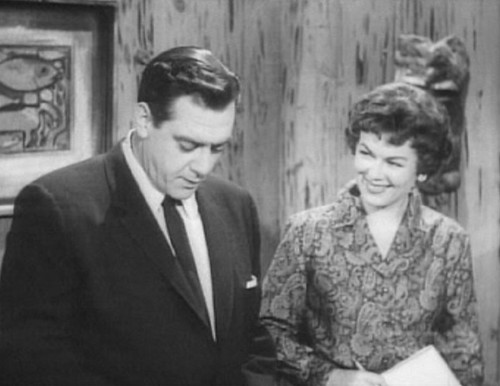
6. Perry Mason is cool. He never lets anything bother him, even when it looks like his client might really be guilty. He's also smart, since he solves the crime. And he never gets too full of himself or his fame. He will also take on cases for free if it interests him. He will also work day and night for his clients, often missing out on sleep and regular meals. Ya, he's that dedicated and he wont disappear for weeks on end or start drinking in the morning. He also knows the law word for word, which is why he is able to get away with so many courtroom dramatics. He's also human and does make mistakes and he even lost in one episode. He's also a slick dresser, pulling off not only dark silk suits, but also mismatched suits with of the moment sport coats. And also Raymond Burr was Perry Mason. Mr. Burr walked into the audition and Erle Stanley Gardner (the author of the Perry Mason books) stood up and said "That's Perry Mason!". He really does look like Perry Mason's description and he had the perfect voice for him too.
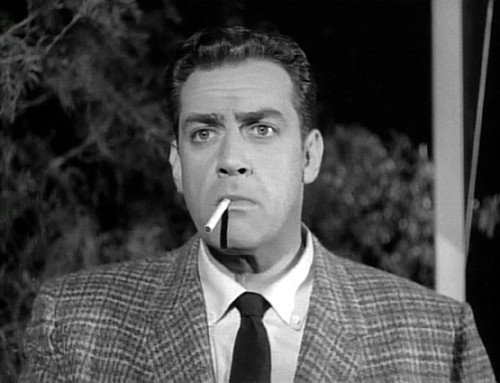
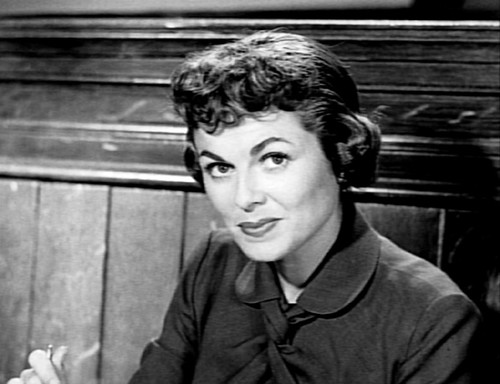
7. Della Street is smart, attractive, efficient and darn good at her job. She's Perry's confidential secretary and sometimes investigator when a woman is needed. Perry relies on her discretion, intuition and her bravery. She is also clearly Perry's equal and he treats her as such. She also works just as hard as Perry and never complains when they have to stay late at the office or when she has to get out of bed at 3 in the morning in order to do something. Perry and Della clearly have a strong emotional relationship and would also be termed "friends with benefits" nowadays, although that aspect isn't really shown in the series but is in the books.
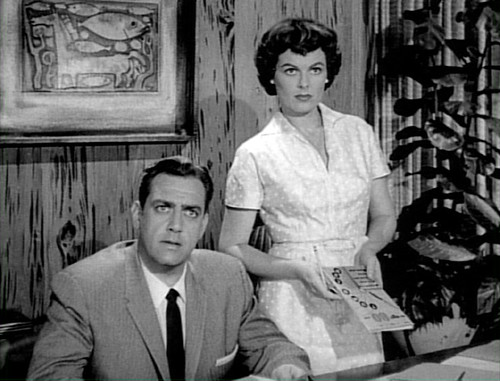
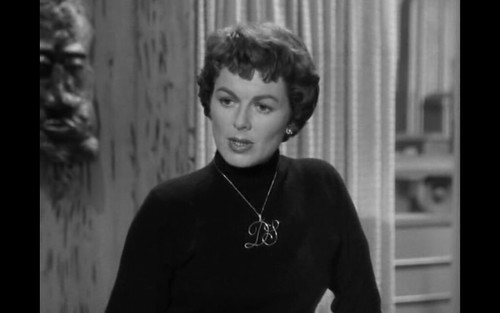
8. Della dresses extremely well and appropriately for her job. Since the show went on for so long, you can really see the changes in fashion and hair through her and how she chooses to incorporate Sixties fashions in her wardrobe and just how slowly it takes for changes in fashion to filter down from designers and magazines. Barbara Hale, who played Della, insisted upon selecting her own costumes from off the rack and on doing so on the average weekly salary of the average secretary, which was $60-70 weekly in 1959, even though Della would be paid considerably more. So, watching Della is like looking at old photos of real people and not magazines and you can see what department stores in LA were actually offering then. Plus you can also see the frequency in which she repeated an outfit and what she wore it with.

She wears those mules a lot in the early seasons.
And that's her signature pendent. How cool is that!
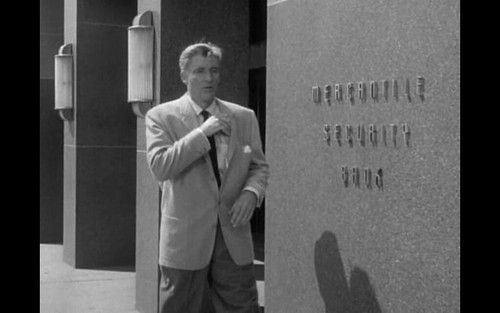
9. If you thought Perry Mason was cool, then Paul Drake is really cool! He was played by William Hopper (son of Hedda) who was prematurely greying, but still the snappy dressed man-about-town and often seen with a Winston hanging out of his mouth and driving a giant Thunderbird. He also likes to flirt with the ladies and check them out, but he doesn't leer. He always greets Della with "Hiya beautiful". Paul Drake is the head of the Paul Drake Detective Agency, which is on the same floor as Perry's office. Perry is his friend and his biggest client. Paul isn't that much of a detective, since Perry solves the murder every week (the show wasn't called Paul Drake). But Paul does have a lot of contacts and a lot of operatives working for him in order to tail a guy for get information or records. Paul is often worried about losing his license, since he doesn't have the same rights to client confidentiality that Perry has. He's also worried about when he gets to eat, which is even less frequently than Perry, since Perry usually has him occupied with the case's legwork.
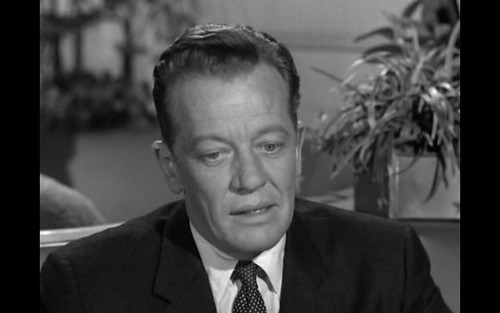
10. For most of the show's trials, Perry had to go up against Hamilton Burger (Ham Burger, get it?) the District Attorney, who's job it was to lose to Perry every week. He tried his best to get information that Perry hadn't discovered or a surprise witness or two. But most of the time, Burger just said "Objection! Incompetent, irrelevant and immaterial" to which the viewer would shout "shut up Burger" at the screen. It wasn't that he was a bad lawyer, he just wasn't Perry. But Burger was really crabby, but honest and just as interested as Perry was in seeing justice done, which is why you can always see the exact moment when he realized that Perry had the case solved and wanted to bang his head on the desk. Besides, Perry and Burger were sort of friends, since Perry was so darn good at the law and he always paid for lunch.
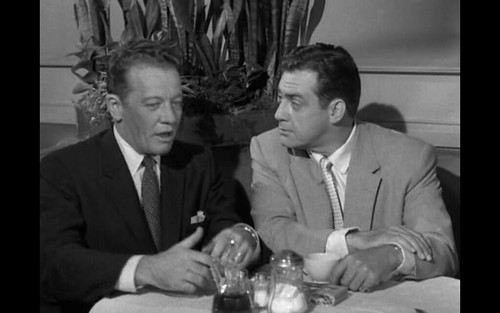
11. Lt. Tragg of Homicide was exactly Perry's nemesis, but he was always convinced that this timehe got Perry beat. He often mysteriously appeared at the door, just in time to grab the evidence that Perry and Paul had just found or to charge Perry's client with Murder One, very full of himself. And sometimes, Perry would be phoning his client and Tragg would answer and tell Perry of the dead body he just found and did he have any information of Homicide. He always seems to enjoy arresting Perry's client, only to look embarrassed when Perry solves the case.
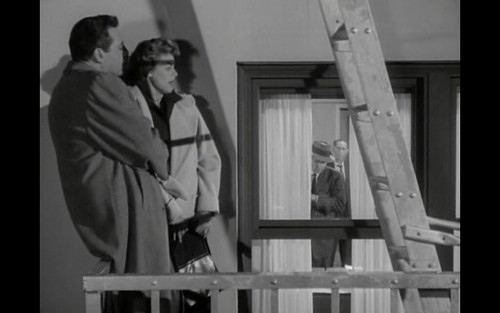
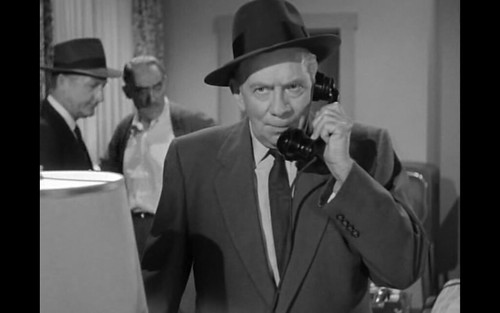
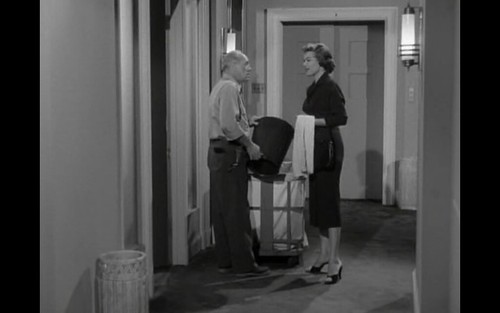
12. The filming is excellent. Full of lots of clever edits, use of light and shade and shadows, close ups of evidence or objects we are supposed to notice. A lot of the camera work clearly takes it's cue from Film Noir, with angles telling us more about the characters and their reaction and emotions than any of their lines could tell us, like in this scene:
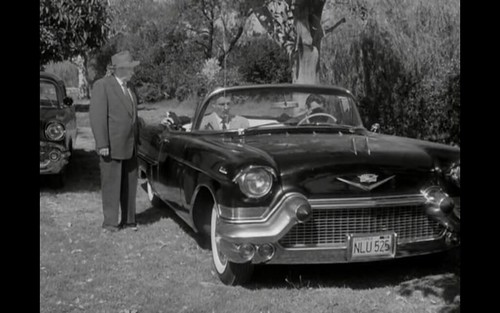


13. The cars were just unbelievable. Massive boats on wheels with terrible brakes but they do look cool. Plus you get to see how a variety people drove when they'd never heard of seat belts or locking their doors. And there's the convenient plot device of having everyone display the registration card on the steering wheel.

14. Obviously the costumes in Mad Men are stunning and painstakingly made. However, they are costumes and they always look just a little too perfect, like they were copied from one of Taschen's Ad books. However, in Perry Mason, the actors wear normal clothes. Even when the stories are set in the country or the characters wear casual clothes, they do have some wear and tear on them, or at least some wrinkles. Plus you get to see how people dressed depending on their social status or work. And there are a lot more hats and gloves, especially veiled hats deliberately chosen for specific characters and flowered hats for completely different characters.

15. Mad Men only shows you how advertising worked in the Sixties. The same is true for most other period pieces, they usually only show one aspect of life. Perry Mason is a social document of what life was like in LA fifty years ago. In setting up and solving the crimes, the cameras show how different companies or small towns operated. There is a huge variety of settings in the series, from investment firms, gold mining, banking, property management, seedy bars, restaurants, gambling, small businesses, general offices, lawyer's offices and of course fashion houses. Plus everything is just as it was, since there is no need to recreate anything.
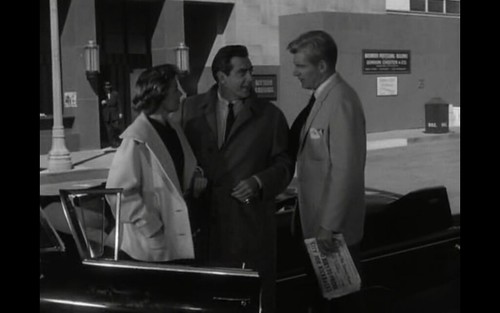
16. You know that every week, these three would solve the crime and everything would be alright in the end, without a personal crisis appearing as a result of working on the case or to create a cliffhanger to be resolved (or not) in the season finale.

Tuesday, April 20, 2010

Cinema Tuesdays {A Guide for the Married Man}

Walter Matthau plays Paul, an accountant heading towards middle-age.
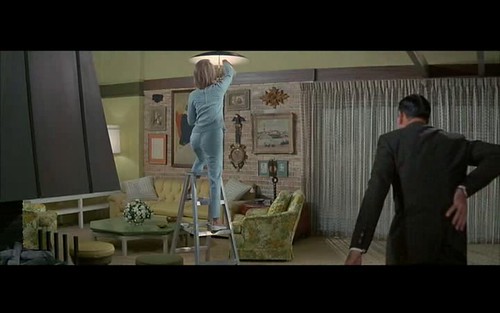
He's got a lovely ranch home in the suburbs, furnished in the popular trends of mustard and brown, wall to wall carpeting, wood panelling and with just a hint of the upcoming Seventies trend (or plague if you like) of avocado.
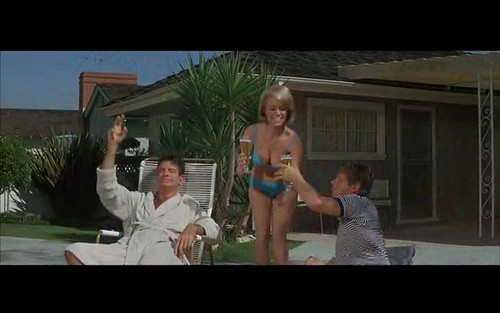
And an adoring, blonde wife who wears a bikini on the weekends.
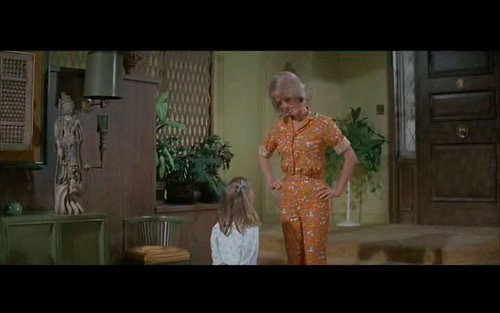
Together they have a perfect blonde child, who never throws a fit.
In other words, Paul has it all. But there's just one problem...
Maybe it's the secretaries around the office, or the working girls he sees driving to work and how they all seem to wear short skirts and have wicker handbags.
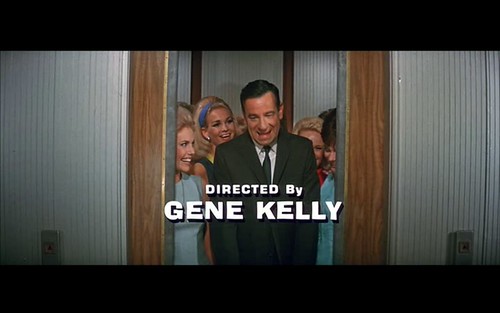
But Paul has developed the Seven Year Itch, so to speak, and he thinks he might like to scratch it. I forgot to mention, but Mr. Kelly does direct this film, but he doesn't appear in it :(
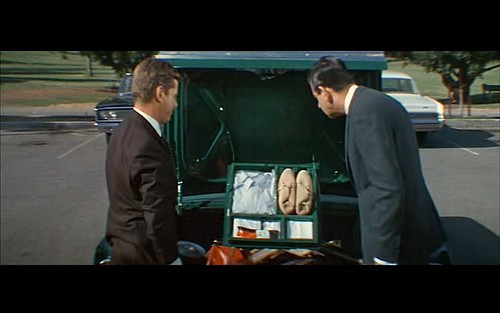
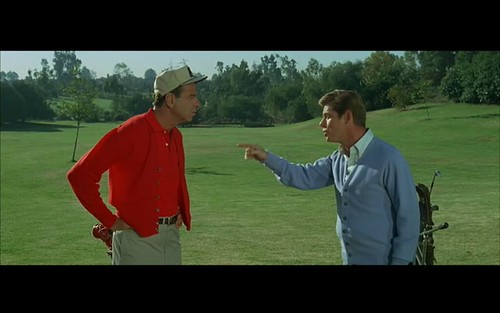
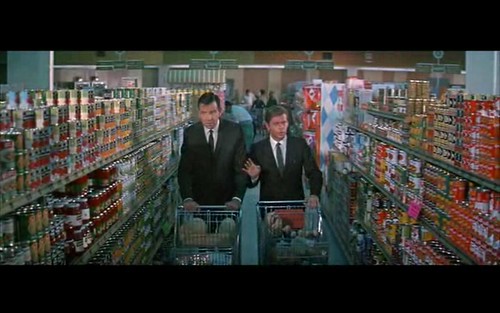
Fortunately, his best friend Ed is an old hand at the delicate art of never letting your wife find out that you've been sneaking out to motels with no luggage in the afternoon.
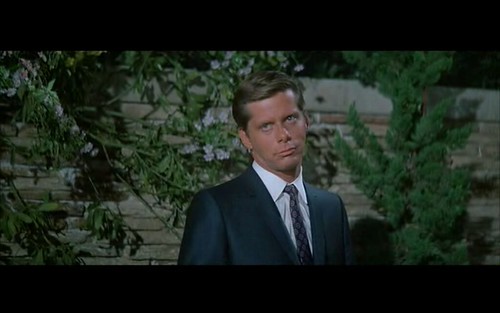
As you can see, Ed is always prepared. Robert Morse is really really good at playing Ed, you'd never think that he is the same person who plays Bert Cooper.
Ed tells Paul that it's important to cheat on your wife in order to release these urges, otherwise they might end up like the character played by Wally Cox, who suddenly started attacking everything in a skirt after fifteen years of marriage and right in the middle of lunch too!
So Ed reasons that they are saving their marriages and the little woman will never need to know, in fact she will probably thank you if she did know.
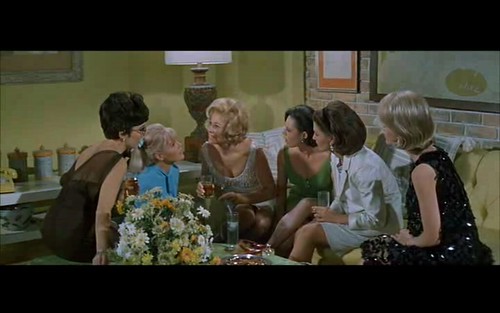
Actually, this is the only thing which the suburban wives talk about at their dinner parties. There's a lot of unmoving bubble hair in this film, and probably in the next season of Mad Men too. Has anyone ever tried helmet hair? What's it like?
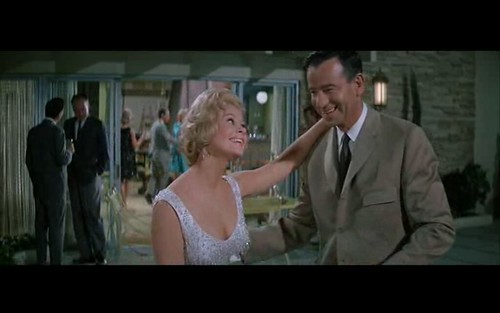
Anyway, Paul really likes his next door neighbour, Mrs. Johnson and her beaded dress.
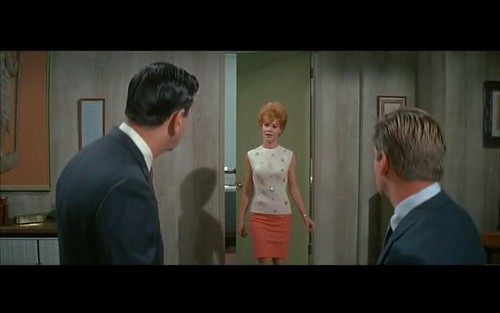
He also doesn't mind his secretary. Love how her hair and skirt matches.
Ed says that Mrs. Johnson and his secretary are bad ideas. After all, they have his wife's phone number.
Instead Ed sets out to give Paul some useful advice before he sets Paul loose into the world of girls. Ed as learned all that he knows from stories that all begin with "There was this guy..." and this is where the film's technical advisors come in. A small selection of which are:

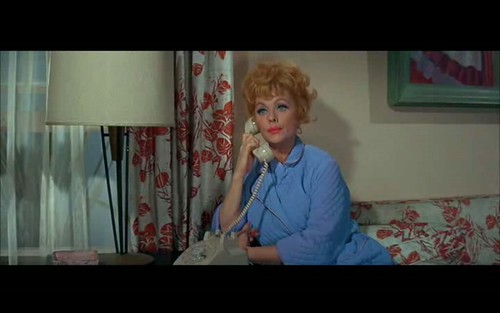
Lucille Ball and her matching chesterfield and curtains.
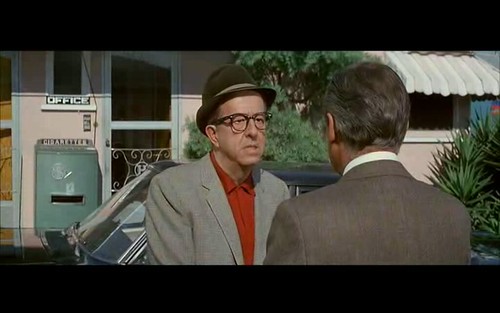
Phil Silvers
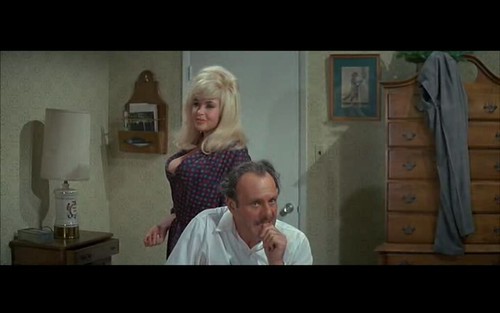
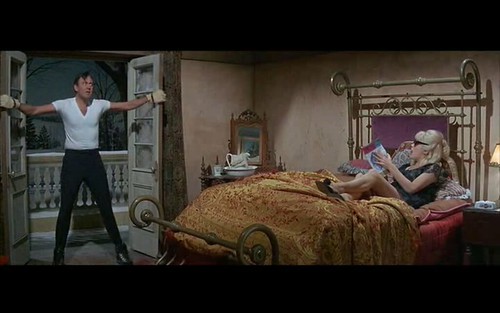
Terry-Thomas and Jayne Mansfield, who cross-dresses in her segment.
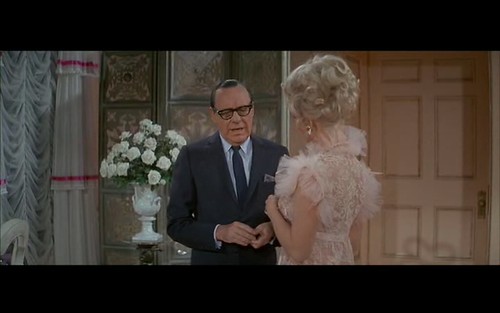
The brilliant Jack Benny playing Jack Benny. I love Jack Benny, he took twenty years to tell one joke.
In the funniest segment, Carl Reiner plays the Great Big Movie Star who chases a starlet with a dozen pairs of cool sunglasses around the world without his wife finding out about it.
But my favourite is the one where Joey Bishop demonstrates how effective one word can be.
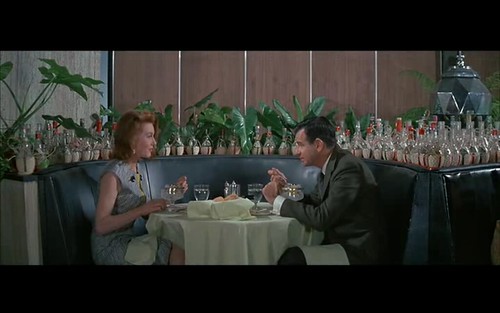
Then there are also practical tips for the date itself, such as how to pick the perfect restaurant and motel,
what to do when your date's lipstick and perfume aren't the same as your wife's,
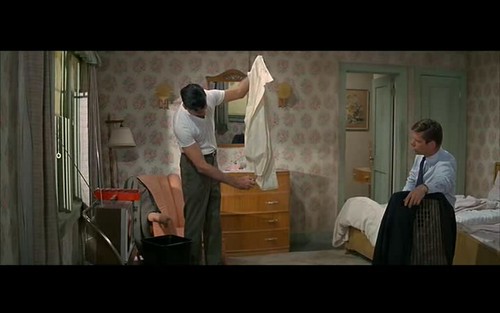
and how to destroy evidence and where to keep the spare shirt. Paul's solution is much cleverer than Don Draper's drawer at the office.
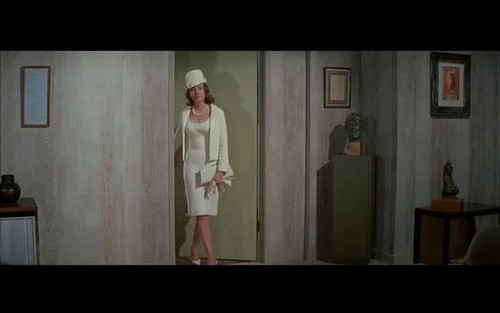
Ed also tells Paul that the perfect date is the recently divorced woman who's alimony is higher than your salary. Guess who Paul's new fashionable client is?
So Paul and the Divorcee go on a couple of business lunches. I love decorating with those wine bottles, they make good book ends and I have a set of small ones that double as novelty salt and pepper shakers.

They also work on her taxes. What do you think of the frosted coral nail polish? I know that it was quite popular, but it always seemed to me that the women who would wear it today are the sort of people to go to Florida for the winter and still have their living room furniture covered in plastic.
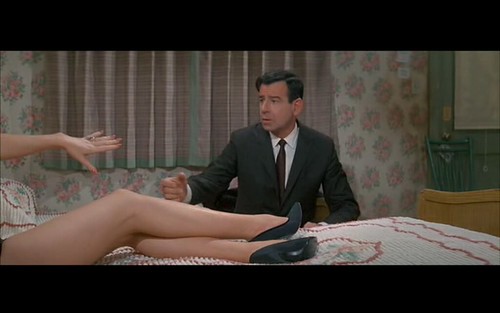
So, does Paul enjoy his motel room with the chenille bedspread
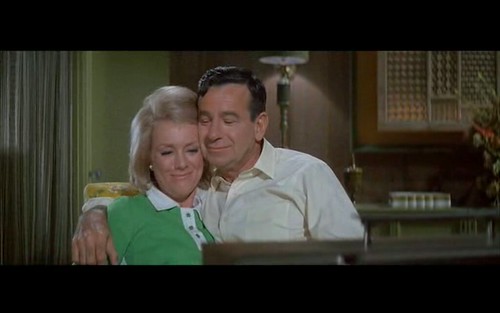
or does he go home to his wife?
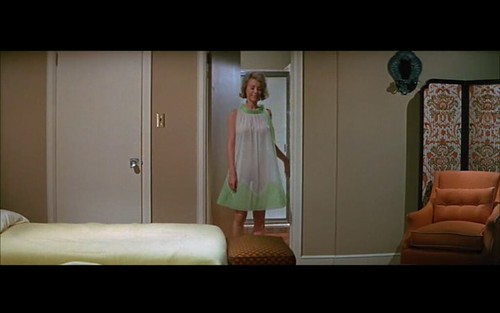
The movie was made in 1967, so you can see the beginning of the transition into the post-Code era of film making. For example, there are some see-through night gowns and a lot of T&A shots.
However, there are still twin beds and the language is quite clean (it is an American film after all) and all adulterers are still punished. But it is still quite interesting to catch glimpses of what American films in the Seventies will be like.